Robotics and Automation in Industries: A Complete Guide to Smart Manufacturing
Robotics and automation have revolutionized the way industries design, manufacture, and deliver products. What began as mechanical assistance for repetitive tasks has evolved into a digital ecosystem of smart machines, intelligent control systems, and connected devices
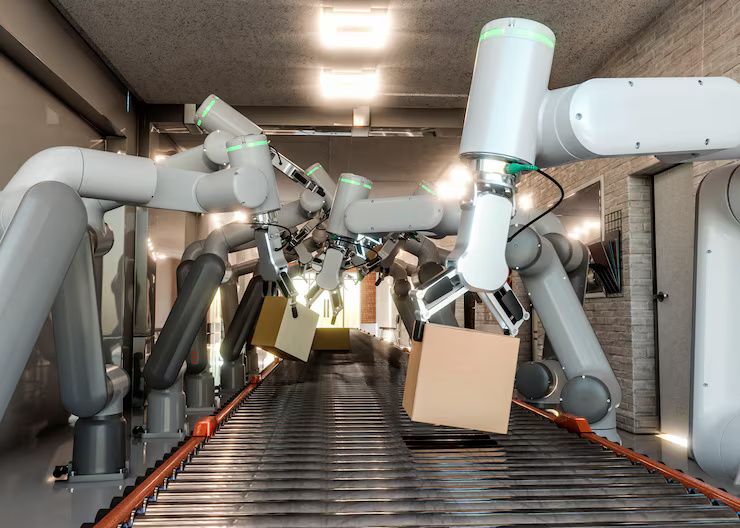
In industrial settings, robots are used to handle materials, assemble components, weld, paint, and inspect products with exceptional accuracy. Automation, on the other hand, involves integrating machines, sensors, and software to perform tasks with minimal human intervention.
Together, robotics and automation form the foundation of Industry 4.0, where data-driven systems and machine intelligence power efficient, adaptive, and sustainable manufacturing.
Importance — Why Robotics and Automation Matter Today
The integration of robotics and automation offers clear advantages across global industries:
-
Higher Productivity: Continuous operation without fatigue or shift breaks.
-
Precision and Consistency: Robots achieve micrometer-level accuracy in assembly and machining.
-
Enhanced Safety: Machines handle hazardous environments and reduce human exposure to risk.
-
Cost Efficiency: Reduced waste, energy use, and downtime lead to long-term savings.
-
Scalability: Production systems can quickly adjust to new designs or demand fluctuations.
As competition grows and labor challenges persist, automation has become a strategic investment — not only for efficiency but also for resilience and innovation.
Recent Trends and Innovations (2024–2025)
Technological progress continues to redefine industrial robotics and automation. The key trends shaping smart manufacturing include:
| Trend | Description | Impact on Industry |
|---|---|---|
| Collaborative Robots (Cobots) | Robots designed to safely work alongside humans. | Increases flexibility and reduces space requirements. |
| AI-Powered Vision Systems | Robots with cameras and sensors for object detection and inspection. | Improves product quality and reduces defects. |
| Digital Twins | Virtual replicas of machines or systems for simulation and optimization. | Enables predictive maintenance and real-time troubleshooting. |
| Edge Computing in Automation | Local data processing at machine level. | Reduces latency and enhances responsiveness. |
| Sustainable Robotics | Energy-efficient designs and recyclable materials. | Supports green manufacturing initiatives. |
According to industry analyses, the global industrial robotics market is expected to surpass $50 billion by 2026, driven by increasing demand in automotive, electronics, and logistics sectors.
Laws, Standards, and Industrial Regulations
Governments and organizations have developed safety and operational standards to ensure that automation and robotics are implemented responsibly.
In India, regulations are guided by:
-
Bureau of Indian Standards (BIS): Establishes mechanical and electrical safety norms.
-
Factories Act, 1948: Specifies operator safety and machine guarding practices.
-
National Strategy for Artificial Intelligence (NITI Aayog): Promotes ethical and sustainable automation adoption.
Globally, relevant standards include:
-
ISO 10218: Safety requirements for industrial robots.
-
ISO/TS 15066: Guidelines for collaborative robot operations.
-
IEC 61508: Functional safety for electronic control systems.
Compliance with these standards helps industries maintain worker safety, cybersecurity, and interoperability among smart devices.
Core Types of Industrial Robots
Modern factories use a variety of robotic systems, each suited to different manufacturing needs.
| Robot Type | Function | Common Applications |
|---|---|---|
| Articulated Robots | Multi-jointed arms with high flexibility. | Welding, painting, assembly. |
| SCARA Robots | Selective Compliance Assembly Robot Arm; ideal for horizontal movement. | Pick-and-place, packaging. |
| Cartesian (Gantry) Robots | Operate on linear axes (X, Y, Z). | CNC machining, heavy part handling. |
| Delta Robots | Lightweight, high-speed manipulators. | Food packaging, sorting. |
| Collaborative Robots (Cobots) | Work safely with humans without cages. | Electronics assembly, inspection. |
| Mobile Robots (AMRs/AGVs) | Move materials autonomously within factories. | Logistics, warehousing. |
Each robot type contributes uniquely to efficiency and workflow integration.
Automation Systems in Smart Manufacturing
Beyond robotics, automation encompasses sensors, control systems, and data integration.
Key components include:
-
Programmable Logic Controllers (PLCs): Manage automated sequences.
-
Supervisory Control and Data Acquisition (SCADA): Provides real-time process monitoring.
-
Human-Machine Interfaces (HMI): Enables operator interaction with machines.
-
Industrial IoT (IIoT): Connects machines to cloud analytics for performance insights.
-
AI and Machine Learning Algorithms: Optimize workflows and predictive maintenance schedules.
When these elements work together, they create a connected factory ecosystem where every process can be monitored, adjusted, and optimized remotely.
Applications Across Industries
| Industry | Automation Applications | Benefits |
|---|---|---|
| Automotive | Welding, painting, assembly lines. | Higher precision and production rate. |
| Electronics | PCB assembly, soldering, inspection. | Reduced defects and faster throughput. |
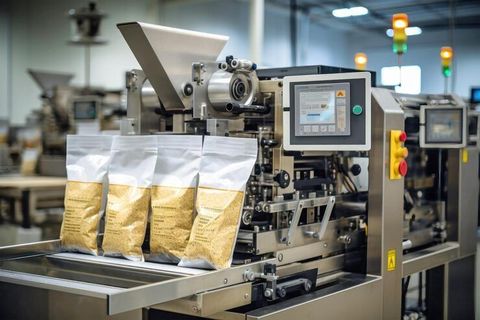
| Pharmaceuticals | Sorting, filling, packaging. | Contamination control and regulatory compliance. |
| Food & Beverage | Cutting, labeling, palletizing. | Consistent hygiene and safety. |
| Metal & Heavy Engineering | CNC machining, forging, quality inspection. | Improved safety and uniformity. |
| Logistics & Warehousing | Automated guided vehicles and drones. | Streamlined operations and lower costs. |
The integration of robotics enables real-time adaptability — a crucial advantage in unpredictable global markets.
Tools and Resources for Industrial Automation
| Tool / Platform | Purpose | Example |
|---|---|---|
| CAD/CAM Software | Robot cell design and simulation. | AutoDesk Fusion 360, SolidWorks. |
| Robot Operating System (ROS) | Open-source robotics middleware. | Controls motion, sensors, and AI modules. |
| Simulation Platforms | Virtual testing of production workflows. | Siemens Tecnomatix, ABB RobotStudio. |
| Predictive Analytics Tools | Maintenance and process optimization. | Azure IoT Hub, PTC ThingWorx. |
| Cybersecurity Frameworks | Protects networked robotic systems. | NIST Industrial Cybersecurity Guidelines. |
These tools are essential for engineers and plant managers to design and maintain automation with maximum safety and efficiency.
Challenges and Solutions in Industrial Automation
| Challenge | Description | Practical Solution |
|---|---|---|
| High Initial Investment | Cost of integration and training. | Phased automation and leasing models. |
| Skill Gap | Lack of expertise in robotics programming. | Workforce reskilling and online certification. |
| System Downtime | Complex troubleshooting requirements. | Predictive maintenance and remote diagnostics. |
| Cybersecurity Risks | Connected systems vulnerable to intrusion. | Secure network architecture and regular audits. |
| Integration Issues | Compatibility between old and new systems. | Use of open communication protocols like OPC UA. |
Solving these challenges enables industries to fully realize the potential of smart manufacturing.
Recent Case Studies and Real-World Impact
-
Automotive Sector: Robotic welding has reduced error margins to less than 0.5 mm, improving quality and efficiency.
-
Pharmaceutical Manufacturing: Automation has enabled 24/7 sterile operations with minimal human contact.
-
Electronics Assembly: Cobots have increased throughput by up to 30% while maintaining safe collaboration with workers.
These examples demonstrate the tangible benefits of combining robotics, AI, and real-time data analytics.
Frequently Asked Questions (FAQs)
1. What is the main goal of industrial automation?
To improve efficiency, precision, and safety by reducing human intervention in repetitive or hazardous processes.
2. How do robotics and automation differ?
Robotics involves physical machines performing tasks, while automation covers broader control systems, software, and data-driven coordination.
3. What industries benefit most from robotics?
Automotive, electronics, pharmaceuticals, and logistics are leading sectors in robotic adoption.
4. Are robots replacing human jobs?
Not entirely. Robots handle repetitive tasks, allowing humans to focus on design, programming, and quality control roles.
5. What is a “smart factory”?
A digitally integrated facility where machines, sensors, and systems communicate in real-time for optimized production and resource use.
Conclusion
Robotics and automation are redefining how industries manufacture, assemble, and distribute products. With the integration of AI, IoT, and digital twins, modern factories are evolving into intelligent ecosystems that are faster, safer, and more sustainable.
As innovation continues, the future of smart manufacturing lies in human–machine collaboration — where robotics enhances creativity, productivity, and environmental responsibility across every sector.