Construction Equipment Guide: Overview, Basics, and Operating Knowledge
Construction equipment refers to heavy machinery designed to perform tasks such as digging, lifting, loading, grading, and material movement. These machines exist to support large-scale infrastructure development where manual labor alone is insufficient
The development of modern construction equipment reflects advances in mechanical engineering, hydraulic systems, and automation. Today’s machines combine power with precision, allowing operators to perform complex tasks in challenging environments.

Why Construction Equipment Matters Today
Construction equipment plays a vital role in economic development and infrastructure growth. It affects construction companies, engineers, urban planners, equipment operators, and public infrastructure agencies.
Key reasons construction equipment remains essential include:
-
Improved productivity: Machines complete tasks faster than manual methods.
-
Enhanced safety: Proper equipment reduces physical strain and workplace hazards.
-
Project scalability: Large infrastructure projects rely on heavy machinery to meet deadlines.
-
Precision and consistency: Modern machines enable accurate excavation, grading, and material placement.
Earthmoving machines help solve challenges such as uneven terrain, large material volumes, and tight construction schedules. Without excavators and loaders, projects like highways, bridges, residential developments, and industrial facilities would face significant delays and operational limitations.
Core Types of Earthmoving and Construction Equipment
Construction equipment includes various machine categories, each designed for specific tasks.
Excavators
-
Used for digging, trenching, and demolition
-
Equipped with hydraulic arms and interchangeable attachments
-
Common in foundation work, pipelines, and earth excavation
Loaders
-
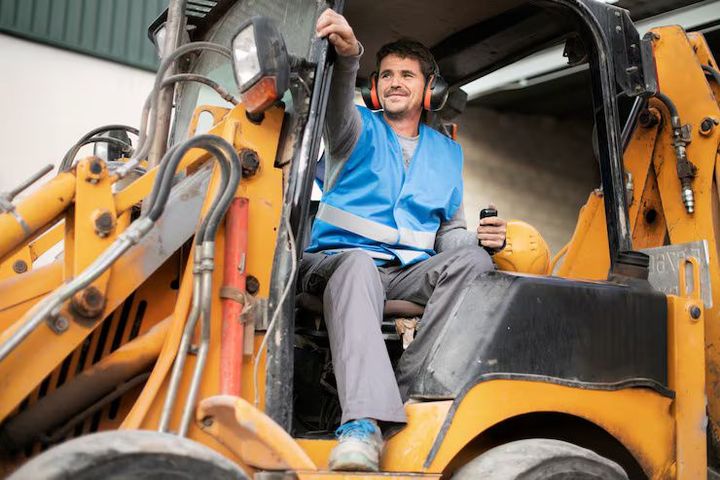
Designed to lift and move loose materials
-
Includes wheel loaders, skid steer loaders, and backhoe loaders
-
Used in material handling, site clearing, and stockpiling
Bulldozers
-
Used for pushing soil and debris
-
Effective for land clearing and rough grading
-
Often used in mining and road construction
Motor graders
-
Used for leveling and surface finishing
-
Essential for road construction and maintenance
-
Provide precise grading control
A simplified comparison of common earthmoving machines is shown below.
| Machine Type | Primary Function | Typical Use |
|---|---|---|
| Excavator | Digging and trenching | Foundations, pipelines |
| Loader | Material handling | Site preparation |
| Bulldozer | Pushing material | Land clearing |
| Motor grader | Surface leveling | Road construction |
Each machine contributes to efficient workflow across different stages of construction.
How Earthmoving Machines Work
Most modern construction machines operate using hydraulic systems. Hydraulic pressure allows machines to generate high force with controlled movement.
Key operating principles include:
-
Hydraulic power transmission: Pressurized fluid transfers force to cylinders and motors.
-
Mechanical structure: Frames, arms, and buckets provide strength and reach.
-
Operator controls: Levers, joysticks, or digital interfaces manage machine movement.
These systems allow machines to operate smoothly even under heavy loads. Advances in control systems have improved precision, making equipment suitable for both rough excavation and detailed finishing tasks.
Recent Updates and Industry Trends
Over the past year, construction equipment technology has continued to evolve in response to productivity, safety, and environmental considerations.
Notable trends observed during 2024–2025 include:
-
Increased automation features: Machines now include automated grading and leveling assistance.
-
Telematics integration: Real-time data monitoring helps track equipment usage and performance.
-
Fuel efficiency improvements: Updated engine designs reduce emissions and improve energy efficiency.
-
Operator-assist technologies: Enhanced visibility systems and safety alerts improve site awareness.
These developments aim to increase efficiency while reducing downtime and operational risk.
Regulations, Standards, and Policy Influence
Construction equipment operation is influenced by safety regulations, environmental standards, and government infrastructure policies.
Key regulatory considerations include:
-
Workplace safety standards: Rules governing operator safety and machine operation.
-
Emission control regulations: Guidelines to limit exhaust emissions from heavy machinery.
-
Noise and site regulations: Restrictions on equipment operation in urban areas.
-
Infrastructure development programs: Government initiatives that influence equipment demand and usage.
Compliance with these regulations ensures safer operation and alignment with national development goals.
Tools and Resources for Construction Equipment Knowledge
Several tools and resources help professionals and learners understand construction equipment and earthmoving machines.
Planning and analysis tools
-
Equipment productivity calculators
-
Earthmoving volume estimation tools
-
Site planning software
Technical learning resources
-
Construction equipment manuals
-
Engineering handbooks
-
Industry research publications
Digital platforms
-
Interactive machine diagrams
-
Equipment operation tutorials
-
Construction technology learning portals
These resources support informed decision-making and technical understanding.
Frequently Asked Questions About Construction Equipment
What is the main purpose of earthmoving machines?
Earthmoving machines are used to move soil, rock, and materials efficiently during construction and infrastructure projects.
How do excavators differ from loaders?
Excavators focus on digging and trenching, while loaders are designed for lifting and transporting materials.
Why are hydraulic systems important in construction equipment?
Hydraulics provide high force, precise control, and reliable performance under heavy loads.
Are construction machines suitable for small projects?
Yes. Compact versions of excavators and loaders are commonly used in small and urban construction projects.
What factors influence construction equipment efficiency?
Machine design, operator skill, maintenance practices, and site conditions all affect efficiency.
Conclusion
Construction equipment, particularly excavators, loaders, and earthmoving machines, forms the backbone of modern infrastructure development. These machines enable efficient material handling, precise excavation, and reliable performance across diverse construction environments.