Powder Coating: Complete Guide to Process, Types, and Applications
Powder coating is a modern finishing process used to apply a durable, protective, and decorative layer to metal and other materials. Unlike traditional liquid paint, powder coating uses electrostatically charged dry powder, which is then cured under heat to form a smooth, even surface
This method was developed in the mid-20th century as an alternative to solvent-based paints, offering a more efficient and eco-friendly solution for industrial and consumer applications. Today, powder coating is widely used in automotive parts, appliances, furniture, construction materials, and machinery.
The growing emphasis on sustainability, efficiency, and aesthetics has made powder coating an essential process in manufacturing and product design worldwide.
Importance — Why Powder Coating Matters Today
Powder coating plays a vital role in modern manufacturing due to its durability, sustainability, and cost-effectiveness. As industries move toward greener production methods, this technology provides a cleaner alternative to traditional paints.
Key benefits include:
-
Superior Durability: Coatings are resistant to chipping, scratching, and fading.
-
Environmentally Friendly: Powder coatings emit no volatile organic compounds (VOCs).
-
Efficient Usage: Overspray can be collected and reused, minimizing waste.
-
Aesthetic Flexibility: Available in a wide range of colors, textures, and finishes.
-
Corrosion Resistance: Extends product lifespan, especially in outdoor applications.
In industrial sectors such as automotive, architecture, electronics, and appliances, powder coating ensures long-term performance and a premium appearance.
Recent Trends and Innovations (2024–2025)
Technological progress continues to expand the capabilities and sustainability of powder coating.
Here are the leading trends shaping the industry:
| Trend | Description | Impact |
|---|---|---|
| Low-Temperature Curing Powders | New formulas cure at 120–140°C, reducing energy use. | Enables coating of heat-sensitive materials. |
| Smart Powder Coatings | Coatings with self-cleaning or antimicrobial properties. | Ideal for healthcare and public environments. |
| UV-Curable Powder Coatings | Fast curing under UV light instead of heat. | Increases efficiency and lowers operational costs. |
| Metallic and Special Effects Finishes | Advanced pigments and textures for design flexibility. | Expands use in architecture and furniture. |
| Automation and Robotics in Coating Lines | Automated systems for precision and consistency. | Improves productivity and uniform quality. |
The powder coating market is expected to grow steadily through 2030, driven by the automotive, electronics, and construction sectors in countries such as India, China, and the U.S.
Laws, Regulations, and Standards
Powder coating aligns with many global environmental and safety standards due to its low emissions and minimal waste generation.
In India, the process is governed by:
-
Central Pollution Control Board (CPCB): Regulates air quality and emission standards.
-
Bureau of Indian Standards (BIS): Defines product and coating quality specifications.
-
National Green Tribunal (NGT): Oversees industrial environmental compliance.
Internationally, the following standards are commonly used:
-
ISO 8130: Methods for evaluating powder coating materials.
-
ISO 9227: Corrosion testing of coated surfaces.
-
ASTM D3359 & D3363: Adhesion and hardness testing procedures.
These frameworks ensure that coatings meet both performance and environmental safety requirements.
Powder Coating Process Overview
The powder coating process consists of four main stages, ensuring adhesion, appearance, and durability.
| Stage | Description |
|---|---|
| 1. Surface Preparation | Cleaning and pre-treating surfaces using degreasing, sandblasting, or phosphating to remove contaminants. |
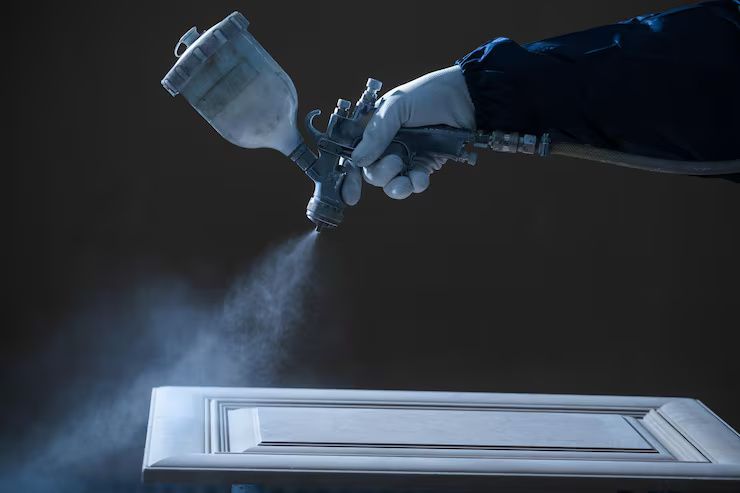
| 2. Powder Application | Applying electrostatically charged powder using a spray gun to create an even coat on grounded parts. |
| 3. Curing | Heating the coated object in an oven (160–200°C) or using UV light to melt and fuse the powder into a uniform film. |
| 4. Cooling and Inspection | Allowing the coated surface to cool and then checking for finish quality, adhesion, and color consistency. |
Proper surface preparation and curing are essential to achieve a smooth, defect-free finish.
Types of Powder Coating Materials
Powder coatings are categorized by their chemical composition and performance characteristics.
| Type | Composition | Best Used For |
|---|---|---|
| Epoxy | Excellent adhesion and corrosion resistance. | Indoor machinery, appliances. |
| Polyester | UV and weather resistant. | Outdoor furniture, automotive parts. |
| Epoxy-Polyester Hybrid | Balanced performance for aesthetics and durability. | Appliances, electrical panels. |
| Polyurethane | Superior gloss and impact strength. | Architectural and decorative applications. |
| Acrylic | Smooth finish with good color stability. | Consumer goods and electronics. |
Selecting the right type ensures optimal performance for each industry and environmental condition.
Applications of Powder Coating
Powder coating is versatile and applied across multiple industries for protection and visual appeal.
| Industry | Applications | Benefits |
|---|---|---|
| Automotive | Wheels, chassis, body panels. | Weather and impact resistance. |
| Appliances | Refrigerators, washing machines. | Aesthetic finish and corrosion protection. |
| Architecture | Window frames, railings, panels. | UV stability and long life. |
| Furniture | Metal chairs, tables, shelves. | Scratch resistance and style options. |
| Industrial Equipment | Pipes, valves, machinery. | Protection from chemicals and abrasion. |
This diversity has made powder coating a standard across manufacturing and infrastructure.
Tools and Equipment Used in Powder Coating
| Tool / Equipment | Purpose |
|---|---|
| Powder Spray Gun | Applies electrostatic powder evenly. |
| Curing Oven | Heats and bonds the coating to the substrate. |
| Pre-Treatment System | Cleans and prepares surfaces. |
| Powder Booth with Recovery Unit | Collects overspray for reuse. |
| Control Panel and Conveyor System | Ensures consistency in production flow. |
Automation and robotic application systems are now widely adopted to improve precision and efficiency.
Advantages and Limitations
| Advantages | Limitations |
|---|---|
| Uniform, durable, and long-lasting finish. | Limited to objects that can withstand heat curing. |
| Environmentally friendly, no solvent emissions. | Difficult to apply thin films below certain microns. |
| Wide color and texture options. | Retrofitting existing equipment can be costly. |
| Low material waste due to recyclability. | Color matching can be complex for small batches. |
Ongoing innovations aim to overcome these limitations with low-temperature curing and UV powder coating methods.
Frequently Asked Questions (FAQs)
1. What makes powder coating environmentally friendly?
It contains no solvents or harmful chemicals, resulting in zero VOC emissions and minimal waste.
2. Can powder coating be applied to non-metal materials?
Yes, newer formulations allow coating on MDF, glass, and plastics using low-temperature curing technologies.
3. How long does powder coating last?
With proper surface preparation, coatings can last 10–20 years depending on exposure and conditions.
4. Is powder coating suitable for outdoor applications?
Polyester and polyurethane powders offer excellent UV and weather resistance, making them ideal for outdoor use.
5. Can damaged powder-coated surfaces be repaired?
Minor scratches can be buffed or recoated, but deep damage usually requires reapplication after sanding or stripping.
Conclusion
Powder coating has emerged as a cornerstone technology in modern surface finishing. Combining durability, environmental safety, and design flexibility, it continues to transform industries ranging from automotive to construction.
As innovations like low-temperature curing, smart coatings, and automation evolve, powder coating will remain a key player in promoting sustainable and efficient manufacturing worldwide.