Industrial Motors Insights: A Complete Guide to Efficiency and Performance
These motors drive machinery in industries such as manufacturing, construction, energy, water treatment, and transportation. From conveyor belts and compressors to pumps and robotic arms, industrial motors enable continuous and precise mechanical movement essential to productivity
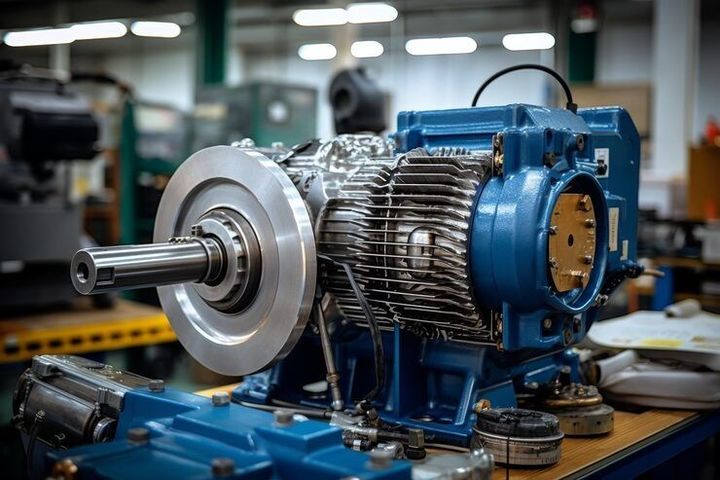
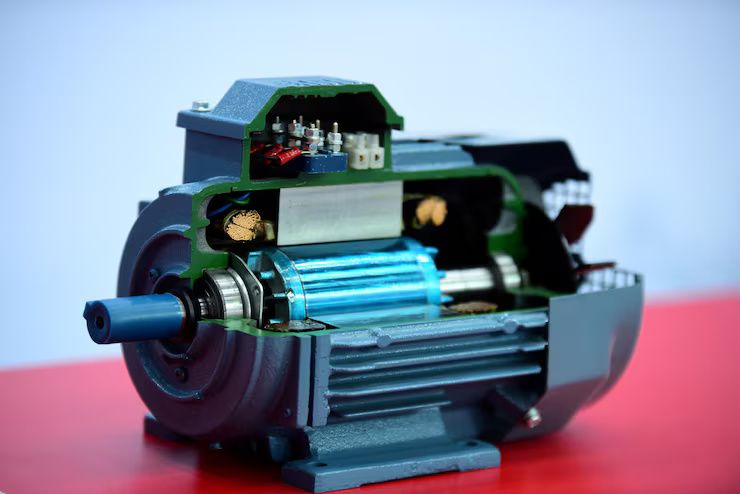
Industrial motors are electrical machines designed to convert electrical energy into mechanical motion. They power countless types of industrial equipment — including pumps, compressors, conveyors, fans, and mixers. Their role is essential in manufacturing, infrastructure, and utilities, providing the mechanical movement required for modern industry.
Why Industrial Motors Matter
Industrial motors are central to modern economic activity and technological progress. Their significance lies in both their functionality and impact on sustainability.
Key Reasons They Matter
-
Automation and Productivity: Motors drive automated systems, enhancing speed, precision, and output across production lines.
-
Energy Efficiency: High-efficiency motors reduce energy consumption and help industries meet sustainability targets.
-
Reliability and Safety: Designed for heavy-duty operation and long lifespans, industrial motors ensure consistent performance with minimal downtime.
-
Economic Impact: Nearly 50% of global electricity consumption is attributed to electric motors, highlighting their vital role in industrial energy demand.
-
Technological Integration: Smart motor systems with IoT sensors and AI-driven monitoring improve maintenance and reduce operational costs.
Industrial motors directly affect sectors such as automotive production, oil and gas, agriculture, and renewable energy, influencing both economic output and environmental performance.
Recent Trends and Innovations (2024–2025)
Industrial motor technology has advanced rapidly in the last few years due to automation, electrification, and sustainability initiatives.
| Trend / Innovation (2024–2025) | Description | Impact on Industry |
|---|---|---|
| Smart Motor Systems | Integration of sensors and IoT monitoring for predictive maintenance. | Reduces downtime and repair costs. |
| High-Efficiency IE5 Motors | Super-premium efficiency motors meeting IEC standards. | Saves up to 10% more energy than IE3 models. |
| Permanent Magnet Synchronous Motors (PMSM) | Compact design with higher torque and lower heat generation. | Widely used in robotics and electric vehicles. |
| Variable Frequency Drives (VFDs) | Enable variable speed control for energy optimization. | Enhances process control and reduces power use. |
| Digital Twin Simulation | Virtual replicas of motors used to test performance and predict failures. | Improves design and maintenance accuracy. |
By 2025, more than 70% of new industrial motors are expected to feature integrated sensors or smart control interfaces for real-time performance analysis.
Regulations and Energy Efficiency Policies
Industrial motors are subject to strict international efficiency and safety standards to reduce global energy consumption and emissions.
Global and Regional Frameworks
-
IEC 60034-30-1 (International): Defines efficiency classes for motors (IE1–IE5), with IE5 representing ultra-premium efficiency.
-
U.S. Department of Energy (DOE): Mandates minimum efficiency standards for electric motors under the Energy Policy and Conservation Act.
-
European Union Ecodesign Directive: Requires manufacturers to meet specific energy efficiency criteria before selling motors in the EU market.
-
India (Bureau of Energy Efficiency – BEE): The Star Labeling Program encourages adoption of high-efficiency industrial motors.
-
Safety Standards: IEC 60204-1 ensures motor-driven machinery meets safety requirements for electrical equipment.
Compliance with these regulations supports sustainability and helps industries reduce operational energy costs while meeting carbon reduction targets.
Types of Industrial Motors
Industrial motors are categorized based on the type of electrical current they use and the operational mechanism they follow.
1. AC (Alternating Current) Motors
The most common type used in industrial applications due to reliability and low maintenance.
-
Induction Motors (Asynchronous): Rugged, simple, and ideal for pumps, conveyors, and fans.
-
Synchronous Motors: Operate at constant speed, often used in compressors or precision machinery.
2. DC (Direct Current) Motors
Known for precise speed control and high starting torque.
-
Brushed DC Motors: Traditional type used for small machinery or variable torque systems.
-
Brushless DC Motors (BLDC): Feature electronic commutation and longer lifespan, used in robotics and EV systems.
3. Servo Motors
Used for precision control in automation and robotics applications where accurate position feedback is essential.
4. Stepper Motors
Operate in discrete steps, making them suitable for CNC machines and 3D printers where incremental motion control is required.
5. Linear Motors
Provide direct linear motion without mechanical transmission—used in high-speed transport systems and industrial automation.
Applications of Industrial Motors
| Sector | Applications | Purpose / Function |
|---|---|---|
| Manufacturing | Conveyor systems, milling, lathes, assembly lines | Continuous operation and automation |
| Energy | Wind turbine drives, compressors, oil pumps | Power generation and resource extraction |
| Transportation | Electric trains, elevators, cranes | Motion control and lifting |
| Water Management | Pumps, treatment plants, desalination units | Fluid movement and filtration |
| Agriculture | Irrigation systems, grain mills, feed processors | Mechanized farming |
| Robotics | Servo and BLDC motors in precision tasks | Controlled motion and automation |
Modern industries depend on motors designed for efficiency, low noise, and smart integration with control systems such as PLCs and SCADA.
Tools and Resources for Engineers and Technicians
Professionals can use various software, calculators, and online tools to design, monitor, and maintain industrial motors effectively.
-
Siemens SINAMICS Startdrive – Configuration tool for drive systems.
-
ABB Smart Sensor App – Monitors motor health and predicts maintenance needs.
-
NEMA MG-1 Standard Manual – Provides performance and design guidelines for electric motors.
-
Motor Efficiency Calculator (U.S. DOE) – Estimates energy savings from motor upgrades.
-
Autodesk Fusion 360 – Useful for 3D modeling of motor components and enclosures.
-
IEEE Xplore Digital Library – Offers research papers on motor control systems and emerging technologies.
These tools help engineers improve efficiency, safety, and operational reliability across diverse industrial setups.
Frequently Asked Questions (FAQs)
1. What factors determine which motor type to use?
Choice depends on power requirements, torque, speed control, duty cycle, and environmental conditions.
2. How do Variable Frequency Drives (VFDs) improve motor efficiency?
VFDs adjust motor speed based on load, reducing energy consumption and extending equipment life.
3. What is the typical lifespan of an industrial motor?
With proper maintenance, industrial motors can operate for 15–25 years, depending on usage and environmental factors.
4. Are smart motors replacing traditional ones?
Not entirely. Smart motors are increasingly adopted, but many traditional models remain in use with retrofitted monitoring systems.
5. How does motor maintenance affect energy costs?
Regular inspection of bearings, lubrication, and alignment can cut energy consumption by up to 10% and prevent unexpected downtime.
Conclusion
Industrial motors power nearly every modern process, from manufacturing and water supply to renewable energy and automation. With growing emphasis on energy efficiency, sustainability, and smart connectivity, motor technology continues to evolve toward digitally integrated, low-loss designs.