AI Video Creators: Digital Content Automation and Generative Media Insights
AI video creators are digital systems that use artificial intelligence, machine learning, and multimedia algorithms to generate or enhance videos. They exist because video production has traditionally required significant time, specialized skills, and complex workflows.
AI video creators continue to evolve due to advances in machine learning, multimodal models, and real-time rendering techniques. The rise of digital communication and the need for faster content development further support the adoption of these technologies.

Importance
AI video creators hold significance because they address several challenges associated with traditional video production. They help streamline workflows, reduce repetitive tasks, and enable the creation of multimedia content at scale. These systems influence students, educators, digital marketers, researchers, trainers, and organizations that produce instructional or informational content.
The technology helps solve problems such as:
-
Limited resources for producing consistent video content
-
Difficulty in creating multilingual videos for global audiences
-
Time-consuming processes involving editing, scripting, and formatting
-
The need for accessible content, including captions and voiceovers
-
Challenges in turning data, insights, or text into clear visual explanations
Industries affected by AI video creation include:
-
Education and e-learning
-
Digital communication and corporate training
-
Media, animation, and entertainment
-
Information services and knowledge-sharing platforms
-
Research visualization and data storytelling
AI video creators also contribute to broader digital transformation by enabling automation, improving accessibility, and expanding creative possibilities.
Recent Updates
The past year has seen notable developments in AI video generation and synthetic media technologies. Rapid improvements in generative models and multimodal frameworks are shaping how videos are produced, enhanced, and distributed.
Key updates and trends from 2024–2025 include:
-
Multimodal AI systems (2024): New models capable of processing text, sound, and images together have significantly improved the realism and accuracy of generated videos.
-
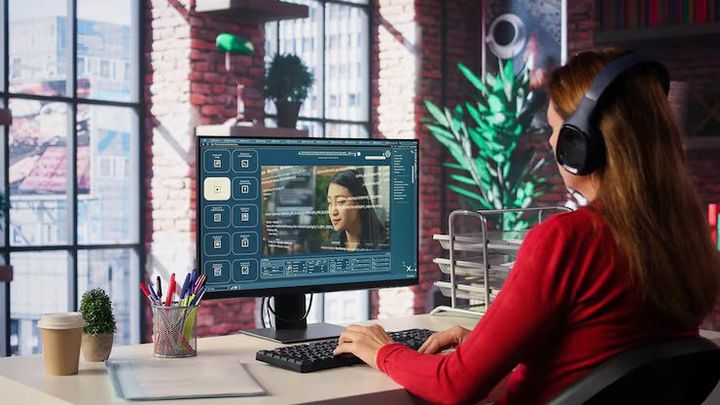
Realistic digital avatars (2024–2025): Advancements in character animation and facial modeling have led to more natural avatars for training modules, presentations, and virtual communication.
-
Voice cloning improvements (2025): AI-based speech generation now produces clearer pronunciation and emotional expression while aligning with emerging ethical guidelines.
-
Automatic scene generation (2024): Tools introduced automatic background creation, dynamic motion rendering, and scene transitions from plain text.
-
Stronger content authenticity tools (2024–2025): Developers added digital watermarking and metadata verification to help distinguish AI-generated content from real footage.
-
More accessible editing workflows (2025): Text-based editing, auto-captioning, and context-aware revision tools became widely integrated into mainstream platforms.
These updates reflect an industry focused on usability, ethical standards, and improved visual accuracy.
Laws or Policies
AI video creators are influenced by digital regulations, content policies, and emerging AI governance frameworks. While policies vary across regions, several common themes exist.
Content authenticity and transparency:
Many countries encourage or require clear disclosure when media is generated or altered by AI, especially in areas involving public information, safety, or sensitive topics. Watermarking and metadata tagging have become standard practices.
Intellectual property and copyright considerations:
Rules often address how AI systems can use training data, how generated content is attributed, and how creators maintain rights to their work. Some regions have introduced datasets with known licensing terms to ensure transparency.
Data protection and privacy standards:
When AI video creators process personal data—such as images, voice samples, or likenesses—they must comply with privacy regulations. These laws emphasize user consent and responsible data storage.
Safety, fairness, and ethical guidelines:
Governments have been releasing guidance on responsible use, focusing on minimizing misinformation, ensuring accessibility, and maintaining ethical AI practices.
These policies help shape how AI video creators operate, especially in areas relating to data use, content integrity, and user protection.
Tools and Resources
Several tools, platforms, and resources support the use, understanding, and analysis of AI video creation.
Content development and editing tools:
-
Text-to-video converters
-
Template-based storyboard generators
-
Automatic subtitle and caption creators
-
Audio enhancement and voice synthesis tools
Frameworks and libraries:
-
Multimedia processing models
-
Neural network toolkits
-
Video rendering engines
-
Animation and motion graphics frameworks
Reference and learning resources:
-
AI ethics guidelines
-
Generative media research publications
-
Online video editing tutorials
-
Industry benchmarks for digital content creation
Monitoring and evaluation tools:
-
Quality assessment dashboards
-
Video compression analyzers
-
Metadata verification systems
These tools help creators, educators, researchers, and organizations work more efficiently and responsibly with AI video generation.
Table: Common Applications of AI Video Creators
| Application Area | Key Functions | Impact |
|---|---|---|
| Education & e-learning | Automated explainer videos, captioning, visual summaries | Enhances accessibility and engagement |
| Business communication | Presentation videos, training modules | Simplifies internal communication |
| Marketing content | Product demos, social visuals, animations | Supports faster content development |
| Research visualization | Data-to-video conversion | Helps explain complex information |
| Accessibility support | Voiceovers, transcription, multilingual videos | Improves content reach |
Table: Core Features Found in AI Video Creator Systems
| Feature | Description | Benefit |
|---|---|---|
| Natural language processing | Converts text into video instructions | Simplifies content creation |
| Computer vision | Enhances scenes, characters, and animations | Improves visual accuracy |
| Voice generation | Produces synthetic narration | Enables multilingual content |
| Auto-captioning | Generates text overlays | Supports accessibility |
| Scene rendering | Creates backgrounds and transitions | Enhances storytelling |
FAQs
1. How do AI video creators work?
AI video creators use machine learning models to process text, audio, or images and generate video sequences. They rely on neural networks for visual rendering, speech synthesis, and content structuring.
2. What types of videos can AI generate?
AI systems can create educational videos, presentations, short clips, animations, tutorials, corporate updates, and informational visuals. The output depends on the tool’s capabilities and the input provided.
3. Are AI-generated videos considered original content?
AI-generated videos are treated as unique outputs, but their originality depends on the training data, creative input, and specific tool policies. Users should review local guidelines for attribution and content usage.
4. What are common challenges with AI video creation?
Challenges include maintaining accuracy in visuals, ensuring ethical use, managing data privacy, and verifying authenticity. Some tools may require refinement or manual adjustments for complex scenes.
5. How is AI shaping the future of video production?
AI is influencing automation, accessibility, and rapid content development. Future trends include more realistic avatars, improved real-time rendering, and stronger content verification systems.
Conclusion
AI video creators are reshaping how digital content is produced, offering structured and accessible ways to create videos across education, communication, research, and media. Advances in multimodal AI, improved rendering techniques, and enhanced speech generation help broaden the possibilities for creators and organizations. With emerging policies, ethical guidelines, and authenticity tools, AI video generation continues to evolve responsibly. As technology improves, these systems are expected to play an even greater role in simplifying workflows, supporting creativity, and enabling scalable video production.