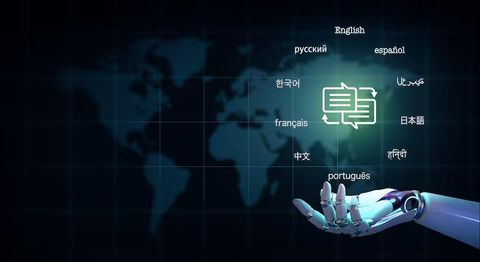
AI Chatbots Overview: Discover Key Basics, Helpful Tips, and Detailed Information
An AI chatbot is a conversational AI system designed to interact with humans through text or voice by using natural language understanding, language models, and machine learning techniques. These tools were created to help automate conversations, provide instant information, and support digital workflows
Businesses, governments, students, educators, and general users interact with AI chatbots daily for information, education, scheduling, queries, troubleshooting, and decision-making support. The expansion of AI-powered communication systems continues to grow as organizations and individuals look for faster, more reliable, and more scalable communication tools.
Importance: Why AI Chatbots Matter Today
AI chatbots have become an essential component of digital ecosystems. Their importance has increased due to rising expectations for immediate answers, the growth of online platforms, and the need for intelligent automation.
Key reasons why AI chatbots matter:
-
Continuous availability: Chatbots provide consistent communication without time restrictions.
-
Scalable information access: Thousands of queries can be handled simultaneously.
-
Improved user experience: Natural language interactions make information easier to obtain.
-
Reduced manual workload: Repetitive queries can be automated, allowing teams to focus on strategic tasks.
-
Data-driven insights: Chatbots help analyse common questions and emerging trends.
-
Support for digital learning: Users rely on chatbots for educational content, tutorials, and knowledge resources.
-
Enhanced accessibility: Multilingual and voice-enabled chatbots support a wider audience.
Who benefits from AI chatbots:
-
Students and educators seeking clear, quick explanations
-
Enterprises using AI automation and digital assistants
-
Website owners who need conversational support tools
-
Government departments providing public information
-
Healthcare and academic institutions sharing knowledge
-
Individuals looking for guidance, research assistance, or daily information
AI chatbots solve common problems such as long response times, limited support hours, and complex navigation across digital platforms. They help democratize access to information and streamline communication across sectors.
Recent Updates: Trends and Developments (2023–2025)
AI chatbot technology has evolved rapidly in recent years. Several important updates have shaped how chatbots are built, trained, and used today.
Key developments:
Growth of Large Language Models (2023–2024)
Advanced models reached mainstream adoption, leading to more accurate conversational AI systems. Improvements in reasoning, summarization, multilingual support, and contextual understanding significantly enhanced chatbot performance.
Rise of Generative AI Assistants (2024–2025)
Generative AI tools expanded the capabilities of chatbots, enabling more sophisticated tasks such as document creation, structured data extraction, planning assistance, and educational guidance.
Voice-Enabled Conversational AI
AI chatbots increasingly include speech recognition and speech synthesis, making interactions more natural across mobile and smart-device environments.
Industry-specific AI customization (2024)
Companies began adopting specialized language models trained for healthcare, finance, manufacturing, logistics, and customer interaction tasks. These domain-focused AI models improved accuracy and reliability across professional workflows.
AI Safety and Responsible AI Guidelines
Throughout 2024, research organizations introduced stronger guardrails around misinformation, sensitive data handling, and fairness. These measures improved user trust in conversational AI platforms.
Regulatory changes across multiple regions (2024–2025)
New AI-specific regulations emerged, focusing on transparency, data protection, model explanations, and responsible deployment. These policies influence how chatbots store, process, and output information.
Overall, the last two years have accelerated the adoption of AI chatbots across public and private sectors, making them more powerful, adaptable, and secure.
Laws or Policies: How AI Chatbots Are Regulated
AI chatbot deployment is shaped by policies related to privacy, security, transparency, and responsible AI practices. While regulations vary by region, several common themes guide the development and use of conversational AI.
Data Protection Regulations
Many countries enforce strict data privacy rules, requiring organizations to inform users about data collection, avoid sensitive data processing, and ensure secure storage. Examples include:
-
Data protection regulations similar to GDPR-style compliance
-
Requirements for user consent and clear data usage explanations
-
Limits on retaining personal information without purpose
AI-Specific Governance Frameworks
Recent policies emphasize responsible AI development. These guidelines often include:
-
Transparency in how AI systems function
-
Clear labeling when users interact with AI instead of humans
-
Accountability for outputs generated by AI tools
-
Risk assessments for high-impact AI applications
-
Limitations on algorithmic decision-making without human review
Cybersecurity Standards
Chatbots connected to enterprise platforms must follow cybersecurity mandates that protect communication channels and restrict unauthorized access.
Public Sector Digital Governance Rules
Government chatbots must comply with rules ensuring fairness, inclusivity, and accessibility in digital public services.
These policies ensure that AI chatbots are used responsibly while prioritizing privacy, data security, and user trust.
Tools and Resources: Helpful Platforms for AI Chatbots
A wide range of tools and resources support the understanding, development, and responsible use of AI chatbots. These options help users explore conversational AI systems, experiment with machine learning models, or analyze chatbot performance.
Popular AI Chatbot Platforms
-
Conversational AI systems powered by large language models
-
Low-code or no-code chatbot builders
-
Voice-based assistant frameworks
-
Cloud-based AI automation platforms
Natural Language Processing Tools
-
Tokenization and language understanding libraries
-
Transformer-based model frameworks
-
Text analytics dashboards
Learning Resources
-
Online documentation for AI and machine learning
-
Open educational materials on natural language processing
-
Research papers on AI safety and model evaluation
Analytics and Optimization Tools
-
User interaction tracking dashboards
-
Conversation flow visualizers
-
AI model evaluation tools
-
Prompt optimization resources
Template Libraries
-
Conversation design templates
-
FAQ structuring guides
-
AI prompt frameworks
Comparative Table: Types of AI Chatbots
| Chatbot Type | Key Characteristics | Typical Usage |
|---|---|---|
| Rule-based Chatbot | Fixed commands, predefined responses | Simple queries, structured workflows |
| AI-driven Chatbot | Uses NLP and ML for conversation | General assistance, dynamic FAQs |
| Generative AI Chatbot | Creates human-like responses using large language models | Research support, writing assistance, knowledge queries |
| Voice-enabled Chatbot | Speech recognition and voice output | Mobile apps, smart devices |
| Domain-specific Chatbot | Trained on specialized knowledge | Finance, healthcare, education, technical fields |
FAQs
1. What is an AI chatbot?
An AI chatbot is a system that uses machine learning and natural language understanding to interact with users through text or voice. It retrieves information, answers questions, and helps automate communication tasks.
2. How do AI chatbots understand questions?
They use language models trained on large datasets. These models analyze sentence patterns, context, and user intent, enabling the chatbot to generate relevant responses.
3. Are AI chatbots accurate?
AI chatbots are designed to provide reliable and helpful information, but accuracy can vary depending on the model, data sources, and the complexity of the query. Users should verify critical information through trusted references.
4. What are common uses of AI chatbots?
They are used for information access, educational guidance, digital assistance, workflow automation, knowledge management, and interactive learning.
5. Can AI chatbots handle multiple languages?
Many modern chatbots support multilingual communication, especially those built on advanced language models capable of understanding and generating text across diverse languages.
Conclusion
AI chatbots have become an essential part of digital communication and information access. Their evolution from rule-based tools to advanced conversational AI systems highlights significant progress in natural language understanding, machine learning, and automation. As technology advances, chatbots continue to offer valuable support in education, enterprise workflows, public information access, and everyday digital activities.