A Guide to Industrial Mixers: Learn Operating Principles, Facts, and Technical Knowledge
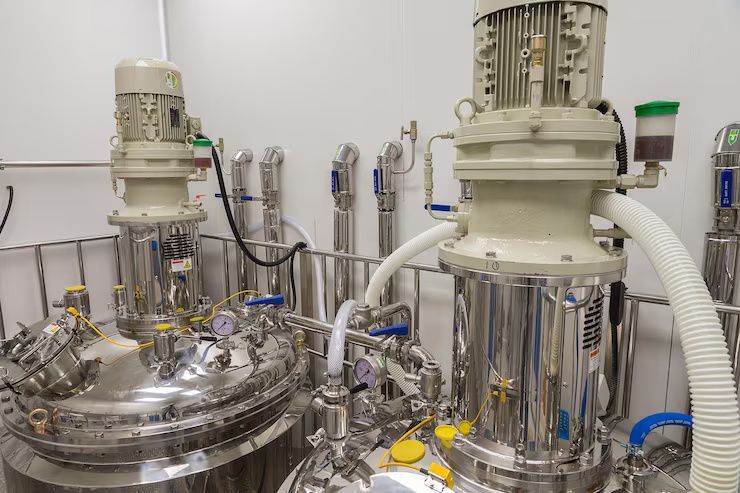
Industrial mixers are mechanical systems designed to blend, homogenize, or disperse materials during manufacturing and processing operations. They exist to ensure uniformity in mixtures that may include liquids, powders, pastes, slurries, or viscous materials. Mixing is a fundamental operation in many industries, including food processing, pharmaceuticals, chemicals, construction materials, polymers, and energy-related sectors
In modern production environments, industrial mixers are integrated into larger processing lines. They work alongside feeding systems, reactors, conveyors, and packaging equipment to support continuous and batch-based manufacturing workflows.
Importance
Industrial mixers are important because they directly influence product quality, processing efficiency, and operational reliability. Inconsistent mixing can lead to defects, performance issues, and material waste, making reliable mixing essential across industries.
Their importance can be understood through several key aspects:
-
Product Consistency: Proper mixing ensures uniform distribution of ingredients, additives, and active components.
-
Process Efficiency: Optimized mixing reduces processing time and energy consumption.
-
Material Performance: Homogeneous mixtures improve physical, chemical, and functional properties of finished products.
-
Industry Impact: Industrial mixers affect manufacturers, process engineers, quality teams, and downstream users.
-
Problem Solving: They address challenges such as segregation, agglomeration, incomplete dispersion, and uneven texture.
From cement and concrete production to pharmaceutical formulations and food processing, industrial mixers play a central role in meeting technical standards and consumer expectations.
Recent Updates
In the past year, industrial mixing technology has continued to advance, focusing on automation, digital monitoring, and energy optimization.
Key updates observed during 2024 and early 2025 include:
-
Smart Mixing Systems (2024): Increased use of sensors and control software allows real-time monitoring of torque, speed, temperature, and viscosity.
-
Energy-Efficient Drive Systems: Manufacturers have introduced improved motor designs and variable frequency drives to reduce energy intensity.
-
Advanced Mixing Geometry: Updated impeller and blade designs introduced in mid-2024 enhance shear control and mixing uniformity.
-
Process Integration: Industrial mixers are increasingly designed to integrate seamlessly with upstream and downstream equipment.
-
Material Flexibility: New mixer configurations support a wider range of material properties, including high-viscosity and shear-sensitive formulations.
These updates reflect a broader industry trend toward intelligent manufacturing and data-driven process optimization.
Laws or Policies
Industrial mixers are influenced by safety regulations, environmental standards, and industrial compliance frameworks. While specific rules vary by country, the underlying principles are consistent.
Common regulatory influences include:
-
Workplace Safety Standards: Regulations require protective guarding, emergency stops, and safe access to moving components.
-
Process Safety Guidelines: Industries handling hazardous materials must follow strict operational and containment requirements.
-
Energy and Emissions Policies: Government programs encourage the adoption of energy-efficient industrial equipment.
-
Material Handling Regulations: Rules governing dust control, noise levels, and waste management apply to mixing operations.
-
Industry-Specific Guidelines: Sectors such as pharmaceuticals, food, and chemicals follow additional compliance frameworks to ensure product integrity.
These policies aim to protect workers, maintain environmental responsibility, and promote reliable industrial operations.
Tools and Resources
A range of tools and resources support better understanding, planning, and operation of industrial mixers.
Educational Resources
-
Process engineering reference guides
-
Industrial mixing handbooks and technical papers
-
Online learning platforms focused on manufacturing technology
Design and Calculation Tools
-
Mixing time estimation calculators
-
Power consumption and torque calculation tools
-
Impeller selection guides
-
Batch volume and density calculators
Monitoring and Analysis Platforms
-
Digital dashboards for mixer performance
-
Condition monitoring and vibration analysis tools
-
Predictive maintenance planning software
Example Table: Common Types of Industrial Mixers
| Mixer Type | Primary Mixing Action | Typical Applications |
|---|---|---|
| Paddle Mixer | Gentle blending | Powders and granules |
| Ribbon Blender | Convective mixing | Dry bulk materials |
| High-Shear Mixer | Intense dispersion | Emulsions and pastes |
| Planetary Mixer | Multi-directional mixing | Viscous materials |
| Static Mixer | In-line mixing | Liquids and gases |
These resources help engineers and operators make informed decisions about mixer selection and process optimization.
FAQs
What is the main function of an industrial mixer?
An industrial mixer combines materials to achieve a uniform mixture, ensuring consistent quality and performance in industrial processes.
How do different mixer types affect mixing results?
Each mixer type uses a specific mixing mechanism, such as shear, convection, or diffusion, which influences how materials interact and blend.
What factors influence mixer selection?
Material properties, batch size, required mixing intensity, processing time, and integration with other equipment all influence selection.
Are industrial mixers used only in manufacturing?
While manufacturing is the primary application, industrial mixers are also used in research, pilot-scale testing, and material development.
How does automation improve industrial mixing?
Automation improves consistency, reduces human error, and enables precise control over speed, time, and process conditions.
Conclusion
Industrial mixers are a foundational element of modern processing and manufacturing systems. Their role in achieving uniform mixtures supports product quality, operational efficiency, and process reliability across many industries. While the core purpose of mixing remains unchanged, recent technological updates have improved control, energy efficiency, and integration within complex production environments.