Industrial Machines: A Complete Guide to Types, Functions, and Applications
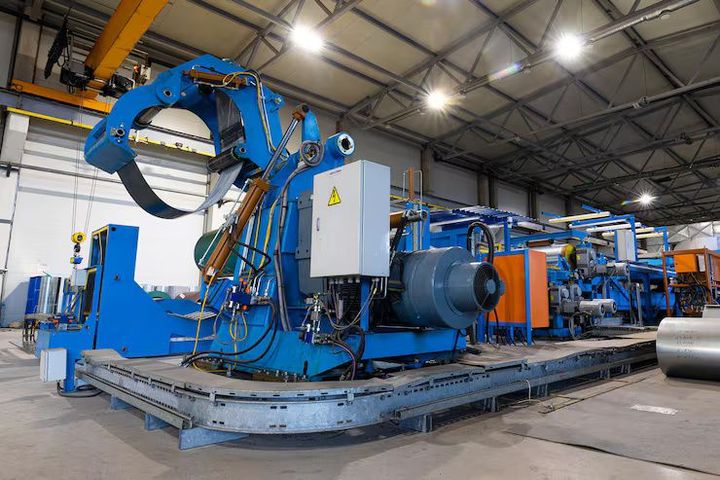
Industrial machines are mechanical systems designed to automate and enhance various stages of manufacturing, assembly, and material processing. From simple mechanical presses to advanced robotic systems, these machines are the backbone of industrial production
Historically, the Industrial Revolution in the 18th century introduced mechanical power through steam engines, shaping early manufacturing processes. Over time, innovations such as electrification, hydraulics, and computer control systems revolutionized how goods are produced.
Today, industrial machines are essential in industries like automotive, aerospace, electronics, construction, textiles, and food processing, ensuring precision, consistency, and efficiency at large scale.
Importance — Why Industrial Machines Matter Today
Industrial machines are critical for global economic growth and modern infrastructure. They enhance productivity, reduce human error, and enable mass production with uniform quality.
Key benefits include:
-
Efficiency: Machines operate continuously, improving output and reducing downtime.
-
Precision: Advanced controls ensure consistent quality in high-volume production.
-
Safety: Automation reduces manual labor in hazardous environments.
-
Sustainability: Energy-efficient designs and smart monitoring reduce waste.
-
Scalability: Easily adaptable for different product lines and industries.
As industries adopt Industry 4.0 and smart manufacturing, machines now integrate with sensors, robotics, and data analytics to optimize operations and minimize costs.
Recent Developments and Trends (2024–2025)
The industrial machinery sector is rapidly evolving due to advancements in automation, artificial intelligence (AI), and digital manufacturing.
| Trend | Description | Impact on Industry |
|---|---|---|
| Smart Manufacturing Systems | Machines equipped with IoT sensors for predictive maintenance and real-time monitoring. | Reduces downtime and increases efficiency. |
| Robotics and Automation | Robotic arms and CNC systems improving precision and speed. | Expands automation across industries. |
| Additive Manufacturing (3D Printing) | Machines producing components layer-by-layer using metal or plastic. | Enables complex, customized parts with minimal waste. |
| Energy-Efficient Equipment | Low-energy motors and regenerative drives. | Cuts operational costs and carbon footprint. |
| AI Vision Systems | Machine vision for inspection and quality control. | Enhances accuracy and reduces defects. |
| Edge Computing Integration | Localized data processing near machines. | Improves responsiveness in smart factories. |
These innovations are reshaping industries like automotive, defense, and renewable energy, where precision and reliability are crucial.
Laws, Standards, and Regulations
Industrial machines are governed by safety and environmental standards to ensure safe operation and compliance with global trade requirements.
In India, relevant regulatory frameworks include:
-
Bureau of Indian Standards (BIS): Sets technical and safety standards for machinery.
-
Factories Act, 1948: Regulates safe use of equipment in industrial workplaces.
-
Central Pollution Control Board (CPCB): Oversees emission and noise levels from industrial operations.
Internationally, the following standards apply:
-
ISO 12100: General safety principles for machinery design.
-
IEC 60204-1: Electrical safety in industrial machines.
-
CE Marking (EU): Ensures compliance with European machinery directives.
-
OSHA Standards (US): Defines operational and workplace safety guidelines.
Compliance with these standards ensures worker safety, environmental protection, and product reliability.
Major Types of Industrial Machines
Industrial machines are classified based on function, motion, and the type of materials they process.
| Category | Examples | Primary Use |
|---|---|---|
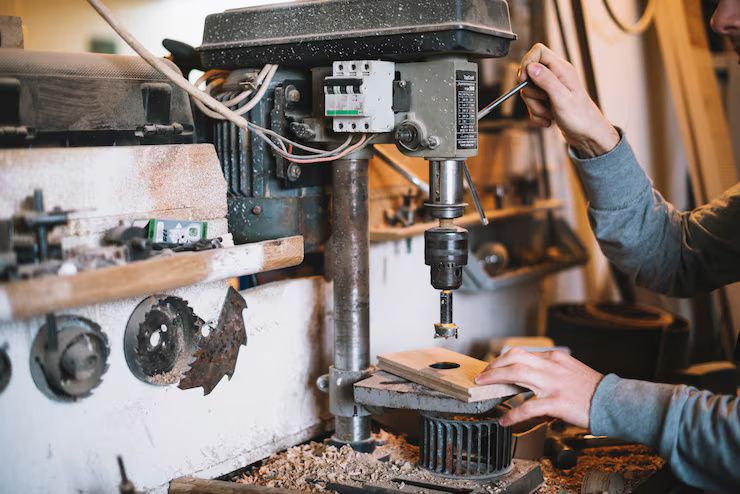
| Material Processing Machines | CNC lathes, milling machines, injection molding machines. | Cutting, shaping, or forming raw materials. |
| Assembly Machines | Robotic arms, automated screwdrivers. | Component assembly and fastening. |
| Material Handling Equipment | Conveyors, cranes, forklifts. | Transporting goods within facilities. |
| Packaging Machines | Fillers, sealers, labeling systems. | Packing products for distribution. |
| Energy and Power Equipment | Compressors, turbines, generators. | Energy conversion and distribution. |
| Testing and Inspection Machines | Coordinate Measuring Machines (CMM), vision systems. | Ensuring precision and quality assurance. |
Each category serves as a building block for industrial production, with many systems now incorporating AI-based control and monitoring.
Applications Across Industries
Industrial machines are used across nearly every production sector:
| Industry | Machine Type | Function |
|---|---|---|
| Automotive | Robotic welders, presses, painting systems. | Vehicle assembly and finishing. |
| Aerospace | CNC machining, ultrasonic testing. | Precision component manufacturing. |
| Food Processing | Mixers, extruders, packaging lines. | Large-scale food preparation and packaging. |
| Pharmaceuticals | Capsule fillers, labeling, and inspection machines. | Accurate dosage and product safety. |
| Construction | Concrete mixers, hydraulic excavators. | Material preparation and infrastructure building. |
| Electronics | PCB assembly and soldering robots. | Component placement and testing. |
Automation and digital control ensure reliability and compliance in each of these fields.
Tools, Software, and Resources for Industrial Machines
Manufacturers and engineers rely on modern tools and digital systems to operate and maintain industrial machinery effectively.
Common Tools and Software Include:
-
PLC Programming Tools (Siemens TIA Portal, Allen-Bradley RSLogix) – Control system programming.
-
CAD/CAM Software (AutoCAD, SolidWorks, Fusion 360) – Machine design and simulation.
-
CMMS (Computerized Maintenance Management Systems) – Maintenance scheduling and tracking.
-
SCADA Systems – Supervisory control and data acquisition for process monitoring.
-
IoT Platforms (AWS IoT, Siemens MindSphere) – Real-time data analytics and connectivity.
These technologies form the foundation of smart factory ecosystems, improving decision-making and operational visibility.
Advantages and Challenges
| Advantages | Challenges |
|---|---|
| Boosts production efficiency and precision. | High initial investment and maintenance. |
| Enhances worker safety by reducing manual labor. | Requires skilled operators and technicians. |
| Enables large-scale and high-speed production. | Cybersecurity risks with connected systems. |
| Integrates with digital manufacturing for real-time control. | Obsolescence due to rapid tech changes. |
Continuous training and predictive maintenance strategies help mitigate these challenges.
Frequently Asked Questions (FAQs)
1. What are industrial machines used for?
They automate manufacturing tasks such as cutting, molding, assembling, packaging, and inspection to increase efficiency and quality.
2. How do smart machines improve production?
They use sensors and real-time data to monitor performance, predict failures, and optimize workflow.
3. Are industrial machines environmentally friendly?
Modern machines are designed with energy-efficient motors, recycling systems, and emission controls.
4. What is predictive maintenance?
A data-driven approach using sensors to detect early signs of wear or failure before breakdowns occur.
5. What skills are needed to operate industrial machines?
Technical knowledge in mechanics, electronics, programming, and safety protocols is essential.
Conclusion
Industrial machines form the core of modern manufacturing, driving productivity, innovation, and sustainability. As industries adopt automation, IoT, and artificial intelligence, these machines are evolving into smart, interconnected systems that redefine efficiency and precision.
From heavy machinery to robotic assembly lines, the fusion of technology and engineering continues to shape the next generation of industrial progress.