Guide to Industrial Bearings: Learn Basics, Functions, and Key Applications
Industrial bearings are mechanical components designed to support motion, reduce friction, and improve efficiency across machines and equipment. They exist because almost every rotating or moving part needs a stable, controlled path of motion. Without bearings, motors, shafts, rollers, and industrial assemblies would experience rapid wear, heat generation, and mechanical failure
The concept of bearings has evolved significantly—from early wooden or bronze bushings to advanced precision bearings made from stainless steel, ceramic composites, and engineered polymers. Modern industrial environments require higher reliability, lower downtime, and more energy-efficient components, making industrial bearings essential for daily operations.
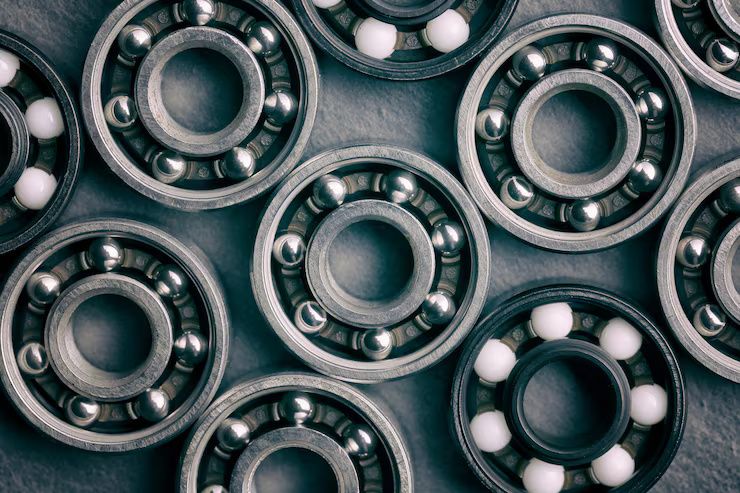
Why Industrial Bearings Matter Today
Industrial bearings are central to productivity, performance, and longevity in machinery. Their importance continues to grow due to increasing automation, rising production demands, and the need for precise motion control.
Who is Impacted
-
Manufacturers using automated equipment
-
Engineers designing machinery and industrial systems
-
Maintenance teams responsible for predictive maintenance
-
Industries running continuous production lines
-
Sectors needing high load-capacity systems, such as mining and construction
Problems Industrial Bearings Solve
-
Reduce friction between moving parts
-
Minimize wear and equipment breakdown
-
Support radial and axial loads
-
Improve efficiency and energy savings
-
Enhance motion accuracy in automated systems
-
Maintain operational safety and stability
Because bearings influence vibration, noise levels, performance, and machine lifespan, their proper selection and maintenance greatly impact industrial operations.
Recent Updates, Trends, and Developments (2024–2025)
Industrial bearing technology continues to advance. Several recent developments highlight the direction of the industry:
1. Growth of Smart Bearings (2024–2025)
Sensors integrated into bearings are becoming common in industries adopting predictive maintenance. These smart bearings measure temperature, vibration, torque, humidity, and speed, offering real-time monitoring for early fault detection.
2. Expansion of Ceramic Hybrid Bearings
Ceramic hybrid bearings, known for low friction and high heat resistance, have grown in demand since mid-2024, especially in electric motors and renewable energy systems.
3. Increased Adoption in Electric Vehicles (2024 Update)
EV manufacturers continue to invest in precision bearings that handle higher speeds and reduce energy losses. This trend influences related sectors, including industrial motors and robotics.
4. Sustainability-Driven Upgrades (Late 2024)
More companies are turning to energy-efficient bearing solutions to reduce carbon footprint, aligning with global sustainability targets.
5. Improved Lubrication Technologies
New automatic lubrication systems and solid-lubricated bearings minimize maintenance needs in harsh environments.
These trends are reshaping how industries approach equipment reliability and long-term performance.
Laws, Standards, and Policies Affecting Industrial Bearings
Industrial bearings must comply with mechanical safety standards, material guidelines, and industry-specific regulations. Although these vary by country, several international and regional standards influence how bearings are manufactured and used.
Key Standards and Regulatory Frameworks
-
ISO Bearing Standards (ISO 15, ISO 281, ISO 492): Regulate load ratings, precision classes, and bearing dimensions.
-
ANSI/ABMA Standards (United States): Provide engineering guidelines for ball, roller, and thrust bearings.
-
RoHS Compliance: Ensures materials used in bearings do not contain restricted hazardous substances.
-
REACH (European Union): Governs chemical usage in lubricants and bearing materials.
-
Machinery Safety Regulations: Industries such as food processing, mining, and pharmaceuticals require bearings meeting hygiene or heavy-duty safety rules.
Impact on Industries
-
Ensures reliability and safety in production environments
-
Promotes environmentally responsible material usage
-
Guides manufacturers toward consistent quality
-
Protects workers by preventing equipment failures
Regulations remain a key driver in shaping bearing design, maintenance practices, and quality control processes.
Tools, Resources, and Helpful Platforms
Professionals working with industrial bearings often rely on specialized tools and digital resources to simplify selection, calculation, and diagnostics.
Useful Tools and Resources
-
Load and Life Calculators: Online platforms that calculate bearing life expectancy based on speed, load, lubrication, and operating conditions.
-
Bearing Selector Tools: Digital tools offering guidance on choosing bearing types using engineering inputs.
-
Condition Monitoring Apps: Mobile applications displaying vibration analysis, temperature data, and fault alerts.
-
Lubrication Charts: Reference tables for grease type, quantity, and lubrication intervals.
-
CAD Libraries: 3D models of bearings for mechanical design and prototyping.
Common Bearing Types Overview Table
| Bearing Type | Typical Use | Key Advantage |
|---|---|---|
| Ball Bearing | Motors, fans, pumps | Low friction and high-speed capability |
| Roller Bearing | Heavy machinery | Supports large radial loads |
| Thrust Bearing | Gearboxes, automotive systems | Manages axial loads |
| Needle Bearing | Compact equipment | Handles high load in limited space |
| Spherical Bearing | Vibrating equipment | Aligns with shaft misalignment |
These tools and references help engineers, technicians, and decision-makers work more efficiently with motion systems.
Frequently Asked Questions (FAQs)
What are industrial bearings used for?
Industrial bearings support motion and reduce friction in machinery. They allow shafts and moving parts to rotate smoothly under various loads and speeds.
What determines the lifespan of a bearing?
Factors include lubrication quality, load capacity, operating temperature, alignment, and environmental conditions. Proper maintenance significantly extends bearing life.
Which bearing type is best for high-speed applications?
Ball bearings and ceramic hybrid bearings are often preferred for high-speed operations due to low friction and heat resistance.
How do smart bearings work?
Smart bearings use embedded sensors to monitor real-time conditions like vibration, temperature, and load. This helps detect early signs of failure and supports predictive maintenance strategies.
Why is lubrication important for bearings?
Lubrication reduces friction, minimizes heat, prevents wear, and protects against corrosion. Incorrect lubrication is one of the leading causes of bearing failure.
Conclusion
Industrial bearings are essential mechanical components that influence the performance, safety, and efficiency of modern equipment. As industries continue to adopt automation, advanced materials, and digital monitoring, bearings are evolving into more intelligent and durable solutions. Staying informed about regulations, trends, and technological developments helps engineers and businesses make better decisions for machine reliability and long-term operations.