CNC Machines: A Complete Guide to Technology, Operation, and Industrial Applications
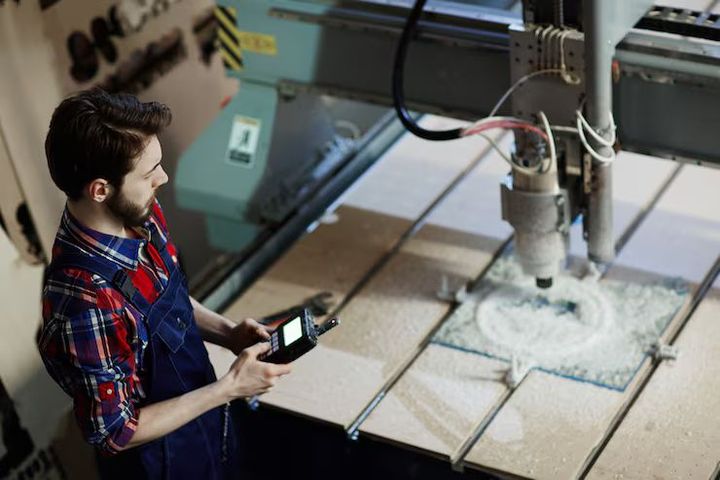
Computer Numerical Control (CNC) machines are automated systems that use programmed commands to shape, cut, drill, and finish materials with high precision. These machines replaced manual machining, where every step depended on human accuracy
CNC machines exist because modern industries require accuracy at levels that manual tools cannot reliably achieve. As manufacturing expanded in sectors like aerospace, automotive, medical, and electronics, the need for automated, error-free production grew. CNC machining became a foundation for industries needing reliable geometry, strict tolerances, and continuous production capability.
Importance
CNC machines matter today because they support industries that rely on precision engineering. They influence how factories make components for vehicles, aircraft, turbines, medical implants, electronic housings, and countless consumer products. Their impact extends to:
-
Improving product quality through precise shaping and predictable repeatability
-
Reducing production errors with controlled movements guided by digital programming
-
Enhancing workplace safety by reducing direct manual contact with cutting tools
-
Supporting large-scale manufacturing where identical parts must be produced continuously
-
Accelerating prototyping for engineering development and design testing
-
Enabling complex geometries that are difficult to create manually
CNC technology solves several long-standing challenges:
-
Inconsistent product dimensions
-
Long machining times in manual processes
-
Increased waste due to human error
-
Difficulty meeting high-tolerance requirements
-
Limited capacity for complex shapes
Industries of all sizes—from small workshops to global manufacturing lines—use CNC systems as an essential part of operations. The technology affects designers, engineers, machinists, product developers, and sectors that depend on components needing tight precision.
Recent Updates
In the past year, CNC machining has seen notable advancements as industries shift toward automation, digital monitoring, and sustainability. These trends reflect global manufacturing changes observed during 2024–2025:
-
Adoption of AI-supported CNC controls (2024–2025): New control systems integrate machine learning to predict tool wear, monitor cutting conditions, and adjust feed rates automatically.
-
Improved energy-efficient spindle systems (2024): Manufacturers introduced motors designed to reduce energy consumption while maintaining cutting accuracy.
-
Expansion of hybrid CNC machines combining additive and subtractive manufacturing (2024–2025): These systems merge 3D printing with milling, allowing parts to be built and finished in a single platform.
-
Cloud-connected CNC monitoring (2025): Factories increasingly use IoT-based dashboards to track machine status, tool usage, and cycle times.
-
Greater use of lightweight materials and composite machining: Industrial sectors now require CNC systems capable of handling carbon fiber, reinforced plastics, and advanced alloys.
These updates indicate a shift toward smarter, more efficient CNC environments where digital data and automated decision-making guide modern production.
Laws or Policies
CNC machining is influenced by regulations related to industrial safety, environmental management, and manufacturing standards. While rules vary by country, several common policy areas apply:
-
Worker safety guidelines: Many countries enforce standards for machine guarding, emergency stops, noise control, and exposure to metalworking fluids.
-
Quality and tolerance standards: Industries such as aerospace and automotive require compliance with national and international precision standards.
-
Emission and waste regulations: Rules may cover cutting fluid disposal, air filtration, and material waste management.
-
Machine certification norms: In some regions, CNC systems must meet manufacturing machinery directives focused on safe operation and control reliability.
-
Digital manufacturing policies: Governments encourage the adoption of advanced technologies like automation, IoT monitoring, and smart manufacturing under national industrial development programs.
These policies help ensure that CNC operations remain safe, environmentally responsible, and aligned with industrial productivity goals.
Tools and Resources
Several tools and resources support CNC planning, programming, monitoring, and learning. They include:
-
CAD software for designing parts before machining
-
CAM software for converting designs into machine-readable tool paths
-
G-code simulators used to preview cutting movements and identify errors
-
Material selection databases for understanding machining properties
-
Tooling databases offering information on tool geometry and cutting parameters
-
Industrial monitoring dashboards that track spindle load, cycle time, and machine health
-
Online training platforms with courses on CNC programming and machine setup
Below is a simple comparative table summarizing common CNC machine types:
| CNC Machine Type | Primary Function | Typical Materials | Key Advantage |
|---|---|---|---|
| CNC Milling Machine | Cutting, shaping, and contouring surfaces | Metals, plastics, composites | High precision and versatility |
| CNC Lathe | Turning cylindrical components | Metals, wood, polymers | Fast production of round parts |
| CNC Router | Cutting softer materials | Wood, foam, plastics | Large work area and speed |
| CNC Laser Cutter | Precision cutting and engraving | Metals, plastics | Clean edges and minimal finishing |
| CNC Plasma Cutter | Cutting metal sheets | Steel, aluminum | Suitable for thick materials |
| CNC EDM Machine | Cutting using electrical sparks | Hardened metals | Extremely fine tolerances |
These tools support industries that rely on digital automation to maintain consistent quality and efficient production workflows.
FAQs
What is the basic principle behind CNC machines?
CNC machines operate using programmed instructions that control movement along specific axes. The commands guide cutting tools, spindles, and workpiece positioning to achieve precise shaping.
Which industries rely most on CNC machining?
Aerospace, automotive, electronics, medical manufacturing, metal fabrication, and consumer product sectors depend heavily on CNC machining for parts requiring accuracy and durability.
Can CNC machines create complex shapes?
Yes. CNC machines can produce intricate geometries, detailed contours, and multi-axis profiles that are difficult or impossible to achieve manually.
Is programming knowledge required to work with CNC machines?
Basic understanding of G-code and machine controls is helpful. Many modern systems feature visual programming interfaces that guide users through tool path creation.
What materials can be processed using CNC technology?
CNC machines can work with metals, alloys, plastics, wood, composites, and advanced engineering materials depending on the type of machine and tooling.
Conclusion
CNC machines play a central role in modern industrial production, providing accuracy, consistency, and reliability across numerous sectors. Their technology continues to evolve with advancements in automation, digital monitoring, and intelligent controls. By reducing errors, enabling complex shapes, and supporting large-scale manufacturing, CNC machines remain essential to industries that require precision and high-quality output. As policies and innovations continue to develop, CNC systems will remain a core part of global manufacturing and engineering activities.