CNC Machines: A Complete Guide to Technology, Features, and Industrial Applications
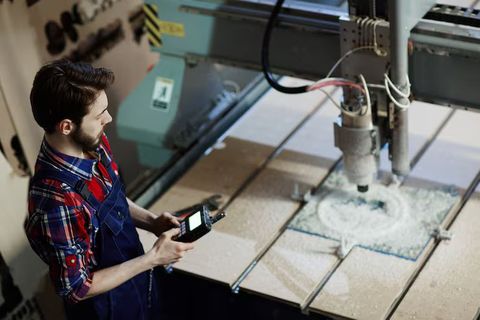
CNC (Computer Numerical Control) machines are advanced manufacturing systems that use programmed commands to control tools and equipment for cutting, shaping, and forming materials. Unlike traditional manual machining, CNC systems operate through computer-aided instructions, ensuring high precision, speed, and consistency
The concept of CNC machining evolved during the 1950s, when early numerical control systems began automating basic milling and drilling processes. With the rise of microprocessors and digital technology, CNC machines have since become the foundation of modern manufacturing — powering industries from automotive to aerospace.
Today, CNC technology combines mechanical engineering, electronics, and software control, offering manufacturers the ability to produce intricate parts with extreme accuracy.
Importance — Why CNC Machines Matter Today
CNC machines are essential in modern production systems, driving both industrial efficiency and product innovation. They replace manual labor with automated precision, enabling faster turnaround and consistent results in complex machining tasks.
Key advantages include:
-
Precision Manufacturing: Produces components with tolerances as tight as microns.
-
Automation and Productivity: Machines can operate 24/7 with minimal supervision.
-
Repeatability: Each unit produced maintains exact specifications.
-
Material Versatility: Compatible with metals, plastics, wood, and composites.
-
Reduced Waste: Optimized cutting paths and automation minimize material loss.
-
Safety and Efficiency: Limits direct human contact with hazardous tools.
As industries adopt Industry 4.0 principles, CNC machines are becoming even more intelligent — integrating data analytics, cloud connectivity, and predictive maintenance.
Recent Developments and Trends (2024–2025)
CNC technology continues to evolve rapidly with digital transformation, robotics, and artificial intelligence (AI) driving innovation.
| Trend | Description | Impact on Manufacturing |
|---|---|---|
| AI-Driven Automation | Machines equipped with self-learning algorithms for process optimization. | Enhances accuracy, reduces tool wear, and improves production speed. |
| Hybrid Machining | Combines additive (3D printing) and subtractive processes. | Enables complex geometries and faster prototyping. |
| IoT and Edge Computing | Real-time data monitoring and analytics integration. | Improves machine uptime and predictive maintenance. |
| Energy-Efficient Systems | Low-power drives and regenerative controls. | Reduces operational energy use and carbon footprint. |
| Advanced Tooling Materials | High-speed cutting tools made from ceramics and carbide. | Increases lifespan and machining capability. |
| Cloud-Based CAD/CAM Integration | Cloud storage and sharing of CNC design data. | Enhances collaboration and reduces setup time. |
These innovations have made CNC systems more flexible and adaptive — ideal for smart factories and customized manufacturing.
Regulations, Standards, and Safety Guidelines
CNC machines must comply with safety and quality standards to ensure reliable performance and workplace safety.
In India:
-
Bureau of Indian Standards (BIS): Defines safety and quality criteria for machine tools.
-
Factories Act, 1948: Regulates safe use of heavy machinery in industrial environments.
-
Central Pollution Control Board (CPCB): Oversees environmental compliance for manufacturing facilities.
Global Standards:
-
ISO 23125: Safety requirements for CNC turning machines.
-
ISO 9001: Quality management system standard for production processes.
-
CE Marking (EU): Indicates machinery compliance with European safety directives.
-
OSHA (USA): Sets occupational safety standards for machine operation.
Adherence to these standards ensures both worker protection and operational efficiency.
Main Types of CNC Machines
CNC machines vary based on their function, axis configuration, and materials processed. Below are the most common types used in modern manufacturing:
| Machine Type | Primary Function | Common Applications |
|---|---|---|
| CNC Milling Machine | Rotating tools remove material to create complex shapes. | Automotive parts, molds, metal components. |
| CNC Lathe (Turning Center) | Rotates the workpiece while cutting tools shape it. | Shafts, bushings, fittings. |
| CNC Router | Used for wood, plastic, and composite cutting. | Furniture, signage, panels. |
| CNC Plasma Cutter | Cuts metal sheets using plasma torch. | Construction, fabrication. |
| CNC Laser Cutter | High-precision cutting and engraving with laser beams. | Electronics, medical devices. |
| CNC EDM (Electrical Discharge Machine) | Uses electrical discharges to shape hard metals. | Aerospace, die manufacturing. |
| 5-Axis CNC Machine | Moves the tool or part in five directions simultaneously. | Aerospace, automotive prototypes, medical implants. |
These machines form the foundation of precision engineering and industrial automation, enabling production of high-quality, repeatable components.
Applications Across Industries
CNC machining plays a vital role in numerous sectors, each leveraging the technology for specialized needs:
| Industry | CNC Application | Purpose |
|---|---|---|
| Automotive | Engine components, transmission parts. | High-precision mass production. |
| Aerospace | Turbine blades, landing gear parts. | Lightweight and durable component manufacturing. |
| Electronics | PCB enclosures, heat sinks. | Fine detailing and micro-machining. |
| Medical Devices | Surgical tools, implants. | Accuracy and sterile production. |
| Defense and Military | Weapon components, surveillance systems. | High-strength and secure fabrication. |
| Furniture and Design | Wood cutting, artistic engravings. | Creative and large-scale production. |
Each application highlights CNC’s flexibility across materials, shapes, and tolerances.
Tools, Software, and Resources for CNC Machining
CNC operation relies heavily on software integration and precision tools. Engineers and operators use a combination of design, simulation, and monitoring platforms to maintain accuracy.
Common Tools and Resources Include:
-
CAD Software (AutoCAD, SolidWorks): For 3D modeling and part design.
-
CAM Software (Mastercam, Fusion 360): Converts design data into machine code.
-
G-Code Simulators: Allows testing of CNC programs before execution.
-
Toolpath Optimization Software: Reduces machining time and tool wear.
-
IoT Dashboards: Provide live data on spindle speed, feed rate, and temperature.
These resources enhance operational efficiency, reduce errors, and extend machine lifespan.
Advantages and Challenges
| Advantages | Challenges |
|---|---|
| Delivers unmatched precision and repeatability. | High initial setup cost. |
| Automates complex production with minimal labor. | Requires skilled programmers and operators. |
| Reduces waste through optimized material use. | Downtime during maintenance or tool change. |
| Integrates easily with robotics and IoT systems. | Cybersecurity risks in connected systems. |
Continuous operator training, maintenance scheduling, and software updates help overcome most operational limitations.
Frequently Asked Questions (FAQs)
1. What is a CNC machine used for?
CNC machines are used for automated cutting, drilling, and shaping of materials with high precision and repeatability.
2. How does a CNC machine work?
It operates based on programmed commands (G-code) that guide tool movements along specific paths to shape materials.
3. What materials can be machined using CNC systems?
Common materials include metals (steel, aluminum), plastics, wood, and composites.
4. What is the difference between CNC and manual machining?
CNC machining is computer-controlled and automated, while manual machining requires direct operator input for each operation.
5. What is the future of CNC technology?
CNC systems are expected to integrate more AI, IoT, and automation features, enabling fully autonomous smart factories.
Conclusion
CNC machines represent the core of modern industrial automation, combining digital control with mechanical precision. From small-scale workshops to advanced manufacturing facilities, CNC systems have redefined how materials are processed — enhancing accuracy, speed, and innovation.
As the industry moves toward smart manufacturing, the integration of AI, robotics, and edge computing will further expand CNC capabilities, ensuring a future where precision and efficiency go hand in hand.